


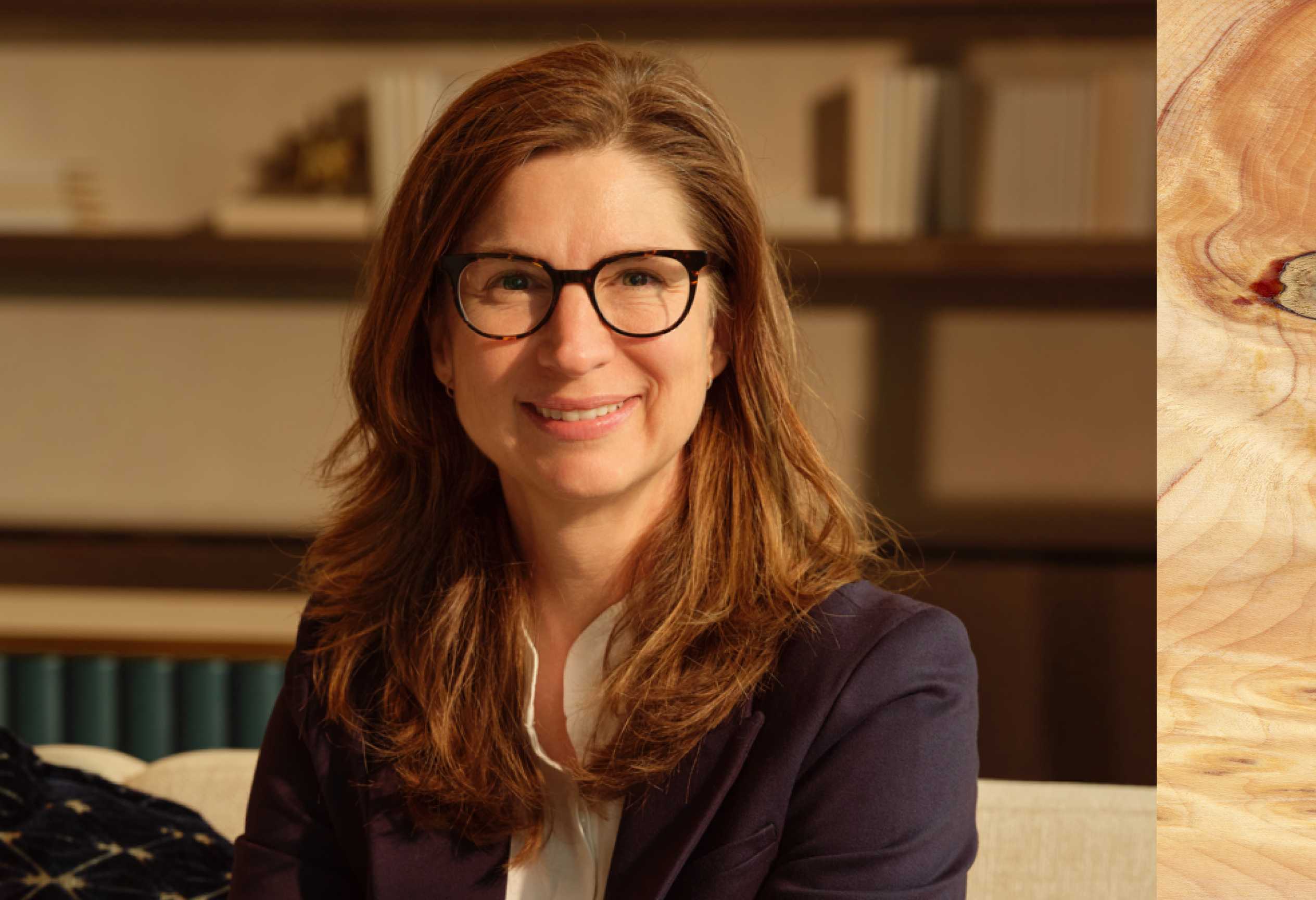
Angela Holmes spent years inside cancer clinics and biotech data rooms before she ever set out to build a company. She led product strategy at an early-stage healthcare software company using machine learning on past patient outcomes to guide cancer treatment decisions, work done in collaboration with UT MD Anderson Cancer Center. She has also spent countless hours in the clinic listening to patients ask the same questions: how common is my diagnosis, what are my options, what does my future look like.
That experience led her to become founder and CEO of OmniScience, where she and a team of PhD-trained computational and data scientists built Vivo, an agentic orchestration platform providing pharma and biotech clinical trial teams a unified, real-time view of their data so they can catch risks earlier and get treatments to patients faster.
“Mercury believes strongly that the best vertical AI platforms will come from domain-expert founders, with strong networks and a unique insight into how product should be delivered,” said Blair Garrou, Managing Partner at Mercury Fund, and OmniScience Board Member. “Angela Holmes background in clinical operations and analytics makes her and the OmniScience team uniquely qualified to solve the clinical trial data overload problem that has plagued big pharma and the FDA for decades.”
Here's Angela’s story, in her own words.
What were you doing right before you started this company, and what finally made you pull the trigger and go all in on this idea?
“I led product strategy for an early stage company working in collaboration with UT MD Anderson Cancer Center to use machine learning from past patient diagnoses, treatments, and outcomes to shape future treatment decisions for patients around the world. I saw first hand both the clinical trial data and the clinical care data, the complex treatment paradigms, the potential for machine learning on past outcomes to shape better treatment decisions, and the real world outcomes for patients. I spent time in the clinic listening to patient’s questions: how many patients like me have you cared for, how common is my diagnosis, what are the treatment options, what are the side effects, what are the clinical trial options, what does my future look like? The overall clinical trial question stayed with me, and ultimately led to my decision to join OmniScience.
I joined OmniScience in 2019, which at the time was a data science consulting firm for life science companies. The team consisted of PhD trained computational life scientists: computational biologists, neuroscientists, pharmacologists, biophysicists, biomedical engineers, and more. We spent years working as a data science partner for many pharma and biotech teams, working on hundreds of clinical trial data sets. During our work, I kept seeing the same disconnect: clinical trials generate enormous amounts of valuable data, but teams struggled with fragmented systems, spreadsheets, and custom code to make high-stakes decisions.
Over the years, OmniScience built a suite of data science tools that helped us solve our customers' problems. With GenAI and other AI advances, we then took our proprietary tools and created an agentic orchestration platform to automate and extend the work being done by clinical development professionals. I went all in because the problem was too important, our team was the best in the world at the intersection of clinical trial data and AI, and AI had finally reached a point where we could solve the clinical trial data overload problem at scale.”
Tell us what you’re building and what problem you’re solving.
“Our team built Vivo, an agentic orchestration platform designed to transform how clinical trials are operated. Clinical development is constrained by fragmented data, legacy software, manual reconciliation, complex logistics, regulatory requirements, and delayed insight. Vivo creates a unified intelligence layer across existing systems so teams can identify risks earlier, make faster decisions, and move treatments to patients sooner. The market opportunity extends across every sponsor, CRO, study, and therapeutic portfolio because the underlying problem is structural and global.”
What did the earliest version of this idea look like, and how far is it from what you're building today?
“The earliest version of Vivo focused on helping clinical teams unify complex clinical trial data and apply advanced data science to answer difficult questions. Today, Vivo has evolved into an agentic AI control tower that continuously interprets evidence across sources (EDC, CTMS, safety, labs, imaging, and other systems), then surfaces what requires attention in real time. The mission has remained constant, but the opportunity has become much larger: we are not simply improving insights; we are creating a new operating model for clinical development.”
What do you understand about this problem that most people still don't?
“Most clinical development teams recognize that AI is a powerful solution for more automation and intelligence in clinical trials. The hard part is how to unify and AI-enable the clinical trial data to get ready for agents, and how to implement an agentic layer that adheres to the regulatory and compliance requirements. Systems must understand the trial protocol, the operational, clinical, safety, and scientific context, the relationships among data sources, and why a signal matters in a specific trial setting. That contextual understanding takes years to develop and validate. Building a unified, AI-ready clinical data layer is a significant engineering investment, requiring deep clinical domain expertise, ongoing maintenance across dozens of vendor integrations, and the quality systems to make it defensible in a regulated environment.
Vivo offers an accelerated, productized path with pre-built integrations and a validated system. For big pharma, the build-versus-buy question is also a question of time. And in clinical development, time is the one thing clinical teams can’t afford to lose. I want clinical trial teams to understand they can have a solution now, live and deployed for their teams within a quarter. Vivo dramatically accelerates the time to value for AI in clinical trial operations, enabling faster, more efficient, and more successful trials for pharma, so they can get medicines to patients, and reach the market.”
What's the hardest decision you've made so far, and what did it teach you?
“One of the hardest decisions was committing fully to productizing Vivo rather than remaining a services-led data science organization. It required focus, investment, and the conviction that the market was ready for a fundamentally new category of clinical trial technology.
I would make the same decision again. Today, Vivo is deployed across global Phase 1–3 trials and open-label extension studies, supporting pediatric and adult cohorts in neuroscience, immunology, oncology, and rare disease. That breadth confirms that the need is both immediate and scalable.”
Tell us a little bit about your fundraising process. What did you wish you knew going into fundraising that you know now?
“Fundraising taught me that the best investors evaluate more than market size or technology. They look for founder-market fit, evidence of customer urgency, the ability to execute, and a vision large enough to define a category. Beyond capital, the right partners help sharpen strategy, accelerate the mission, expand relationships, recruit talent, and prepare the company for the next stage of growth.”
What's the one thing you'd tell a founder who's about to raise their first round?
“Know precisely why this company must exist, who is in so much pain that they will pay for a solution, and why your team is uniquely capable of building it. Investors will challenge the market, the product, the timing, and the risks, but conviction grounded in evidence is difficult to dismiss. Raise from partners who understand the scale of the mission and are prepared to work alongside you when the path becomes difficult.”
How did you first connect with the Mercury Fund team, and what did that early conversation feel like?
“From the beginning, the conversations with Dan Watkins, Blair Garrou, and the Mercury Fund team were grounded in the magnitude of the clinical development problem, the quality of the team we had assembled, and the potential for Vivo to become foundational infrastructure for the clinical trial industry. It felt less like a traditional pitch and more like a strategic relationship aligning on what it would take to build and scale a category-defining company.”
What made Mercury Fund, and the partner, the right relationship for that stage?
“Mercury understood both the ambition of the vision and the operational work required to realize it. They recognized that transforming a 50-year-old clinical development process would require more than strong technology; it would require enterprise discipline, regulatory credibility, thought leadership, customer partnership, and long-term conviction. Working with Blair and Dan has been critical for our success. Their experience scaling software companies, knowledge of the life science ecosystem, and belief in our mission made them the right partners for this stage.”
Why is OmniScience particularly well positioned to lead this market?
“My background sits directly at the intersection this moment requires: biomedical engineering, healthcare, enterprise software, AI, product strategy, operations, and commercialization. We have the most skilled team in the industry at the intersection of AI and clinical trial data, and we have translated that knowledge into a product already operating across complex global trials.
Our collaboration with FDA leaders on real-time clinical trials further reinforces that Vivo was built for where the market is going.”
How does the FDA collaboration change the opportunity?
“Our conversations and collaboration with FDA leaders confirmed that the regulatory operating model is moving toward real-time evidence and more continuous visibility into trial execution. This new approach by the FDA could cut clinical development timelines by 40% and add $100B in value to pharma. These savings - in cost and timelines - are significant, and will translate into more medicines for more patients, especially in rare diseases, and will allow capitalism to drive lower drug prices. That alignment matters because it validates both the urgency of the problem and the direction of the solution. Vivo helps sponsors build the unified, governed, source-backed intelligence infrastructure needed for this new era.”
What gives you confidence in OmniScience’s growth potential?
“The market is moving rapidly toward continuous evidence interpretation, AI-enabled oversight, and more direct engagement with live clinical trial data. Leading pharma and CRO teams are not asking whether they need this capability; they are asking how quickly they can deploy it, govern it, and scale it across their portfolios. That creates an extraordinary opportunity for OmniScience to become the trusted intelligence layer for modern clinical development.”
What's the last book, podcast, or conversation that actually changed how you think about something?
“A recent conversation with FDA leaders about the future of real-time clinical trials fundamentally expanded how I think about Vivo’s role. We built the platform to help sponsors act on evidence earlier, but the FDA discussion made clear that the same infrastructure could support a much broader transformation in how evidence is generated, reviewed, and shared. It reinforced that we are not simply building better clinical software. We are helping create the foundation for a new regulatory and operational model.”
Parting Thoughts
“We are at the beginning of a once-in-a-generation transformation in clinical development. The technology, regulatory direction, customer urgency, and market need are converging. OmniScience has the team, the product, the trust infrastructure, and the real-world deployments to lead this shift. Our goal is not simply to make trials more efficient. It is to fundamentally change how clinical evidence becomes action so more medicines can reach more patients, faster.”