


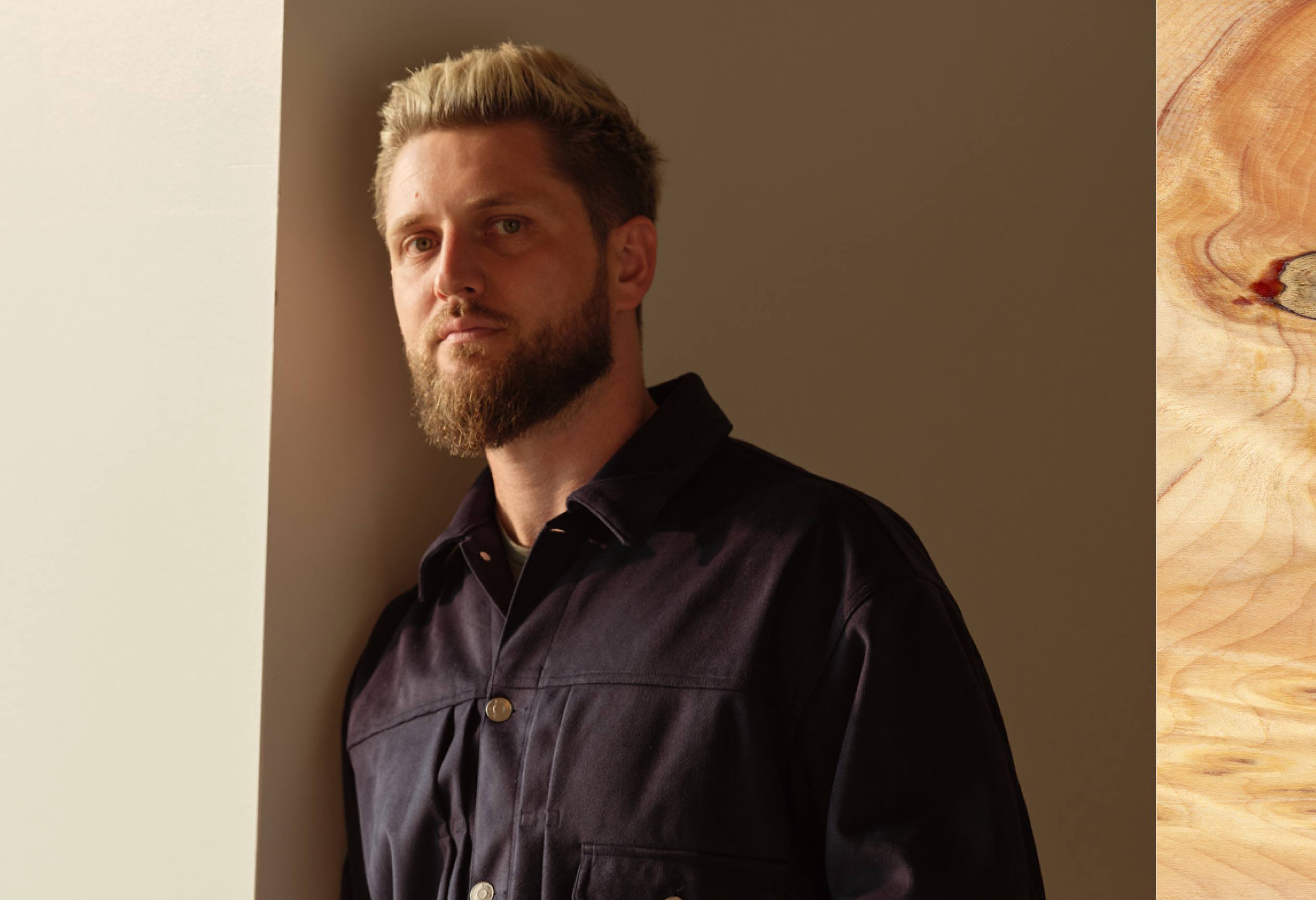
From Restaurant Rewards to a $30M+ ARR Med Spa Platform, Phil Sitter's Path Was Never Traditional
RepeatMD has grown into one of the leading software platforms in medical aesthetics, surpassing $30 million in ARR. Despite building a successful software company for med spas, Phil Sitter didn't start his career in medicine.
Phil came up through restaurants, running them, then franchising them, then building the loyalty technology behind them. When Texas regulations blocked him from including alcohol as part of his restaurant rewards program, he hired attorneys, lobbied regulators, and became the first person in the state to get approval to offer alcohol as a rewards perk. That instinct, to find the consumer problem and build toward it regardless of what the industry assumes, is the same one he brought to medical aesthetics.
Phil had never worked in software or medicine when he started RepeatMD, and he bootstrapped the company to $6 million in ARR before he considered bringing on traditional VC investors. Mercury backed him from there.
“Phil is the epitome of an entrepreneur,” said Aziz Gilani, Mercury Fund Partner and RepeatMD Board Member. “He sets incredible goals and then refuses to take “no” for an answer. Phil has no time for excuses, focusing on “How can I do this” instead of why he shouldn’t be able to do it. If he has exhausted every possibility and something is truly impossible, he internalizes his lessons and pivots hard. I think he gets his maniacal focus from his father who was a serial restaurateur. Watching those restaurants succeed and fail as a child has given him the resilience to succeed in any market. It’s genuinely amazing to watch him at work.”
Here's Phil's story, in his own words.
What were you doing right before you started RepeatMD, and what made you finally pull the trigger to go all in on this idea?
"I'm a fifth-generation restaurateur. I owned restaurants, then started franchising them, and I wanted a more scalable rewards program than the membership club we ran on gold cards and Excel spreadsheets. A friend who owns another restaurant chain in Houston asked if I could build a rewards program for him too, and that got me into software. I added alcohol rewards, ran into TABC regulatory issues, hired attorneys, lobbied, and got approval. I was the first person to get approval to offer alcohol as a rewards perk in Texas. Once I had it, I started licensing the whole thing out. In our first nine months, 500 restaurant groups used it across 17 states.
Then I sold my restaurants, retired my dad as my partner, and COVID happened. I started to look for other industries where rewards technology could apply. I tried car mechanics, and I built a presentation for HISD to reward kids for attendance. Then a friend who was a Botox rep pointed me toward med spas. I ran a trial with Dr. Ben Cilento, and Dr. Cilento reported a huge return in 30 days. I couldn't figure out why until I compared average check sizes: $25 in restaurants, $600 in med spas. I realized that I just needed to help a practice get two new patients each month and they'd be thrilled. That's when I knew the aesthetics and wellness industry was the future."
Tell us what you're building and the problem you're solving and for whom.
"At its core, RepeatMD transforms patients' lives. We think about a med spa, plastic surgery, or dermatology patient as a luxury consumer who spends real money on themselves, and we build products to make that experience better. Ageless does before-and-after imaging so patients can see what a treatment will look like. RepeatMD gives patients rewards, financing, and memberships, and we were the first to let a patient buy a treatment from home through an e-commerce experience, something that didn't exist before we built it in 2023. Most people didn't think patients would buy a medical treatment without a consultation. But a lot of these are returning patients who want a deal on Mother's Day or want to discover treatments on their own time. Today we have 2.5 million patients on the platform.
We also brought in financing, and we launched SkinDrop, which lets patients buy from 800 different skincare brands without the practice ever holding inventory. We ship from our warehouse, the practice makes a cut, we make a cut, and the patient gets a better experience."
What do you think you understand about this problem that people still don't?
"The people who built this industry before me were all clinicians. I came in with a consumer mindset because I didn't know anything about the treatments, and I think that's a good place to start. Everybody else was so dogmatic about building a 'medical experience' - forms, consultations, structured intake - that they never questioned it. I just thought about it as a consumer-first experience and built for me. I never worked at a med spa or an EMR company. I came in knowing nothing, which meant I had to build it from the ground up instead of from what I assumed it should look like. The burden of knowledge can be a trap. It's easy to get stuck defending the way things are supposed to work instead of discovering a better way to do them."
Looking back at building the business, what's one of the harder decisions you've made, and what did it teach you?
"The hardest lessons have all been about people. When you start fundraising, there's an expectation to grow fast, and the instinct is to hire people who've been there and done that. It feels rational. But you need your own operating system and culture first. If you hire before you have that, every leader runs their department based on how they operated at their last company, and you end up with fiefdoms instead of one company. That's what happened to me. If you build the system first, people can improve on it. If you don't have one, hiring just creates fiefdoms.
What made you decide to go out and fundraise, and what do you wish you knew going into that process?
"People reached out all the time, but I was never interested in raising. I had investors as a restaurateur and it wasn’t a great experience. I bootstrapped us to $6M but an advisor, Emily Keeton, came from a venture background and was adamant that what we'd built was rare and that we should consider raising venture capital. She opened my mind to it.
I think we actually ran the fundraise well. What I'd do differently is take a step back before pushing the growth pedal all the way down and audit which systems were structurally sound. It's natural to take capital and immediately hire and go faster, and you should go faster once you take venture money, but the hiring process, the operating cadence, your values, your data integrity, all the things you skip past while you're growing fast eventually become your limiters. If I'd thought about those earlier, we'd have had a healthier growth curve instead of constantly rebuilding and replacing."
How did you first connect with Mercury?
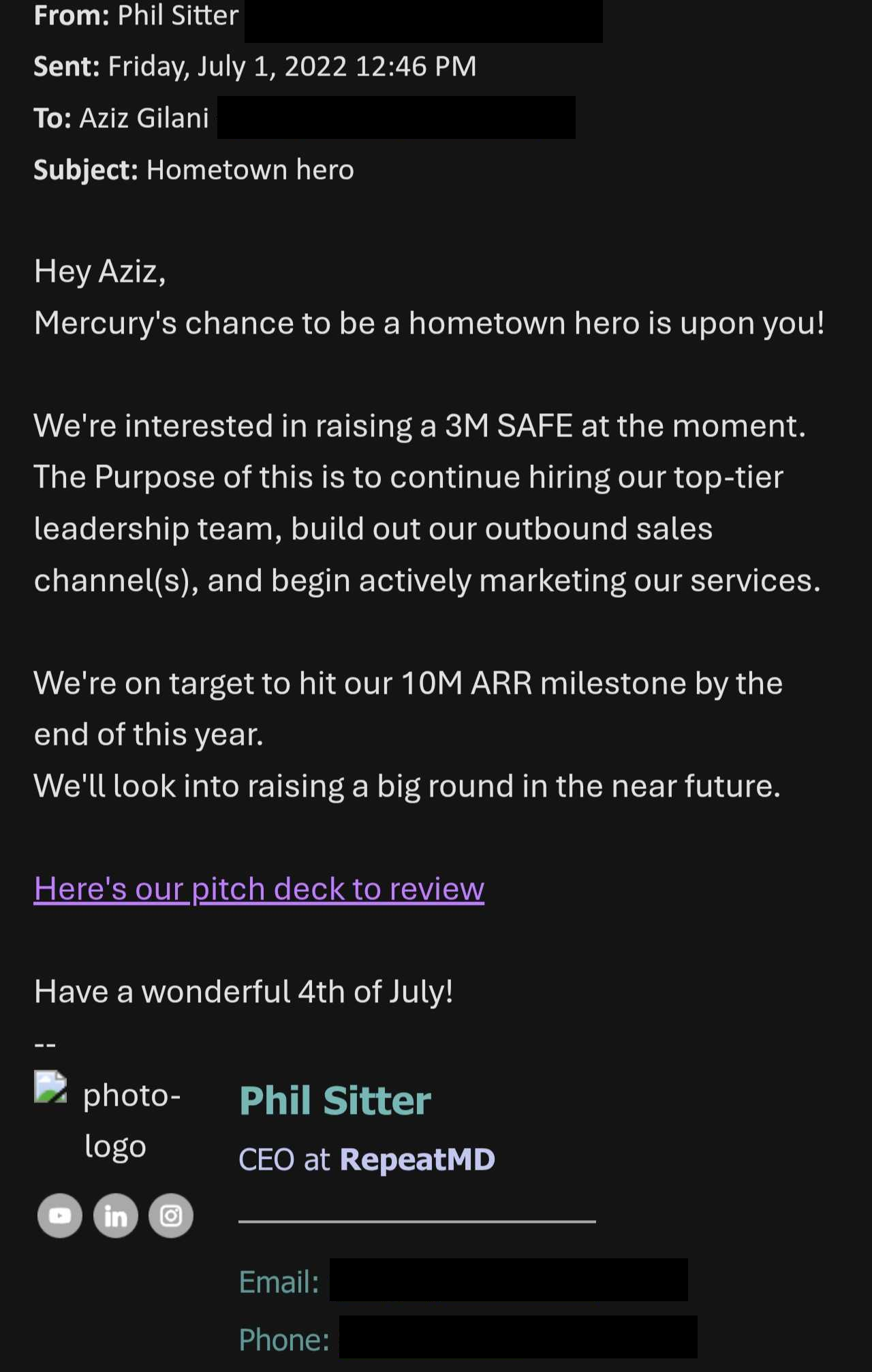
"Emily Keeton is an advisor at Mercury Fund and introduced me to Aziz. I really liked him so I emailed him with the subject line 'Hometown hero'. I told him we’d be raising and thought it'd be great to have a Houston founder paired with a Houston fund.
We had a strong offer from a San Francisco fund at the time, but I was a first-time software founder, and I recognized the advantage of having someone local who I could just pop into the office, talk to, and build a relationship with. That person was Aziz and he’s been a partner to us ever since."
When you raised subsequent rounds, how did your fundraising philosophy change?
"The next round came together under pressure. We'd raised our seed nine months earlier and were about to close a $6 million venture debt facility with Signature Bank in March of 2023. On my birthday, moments before the cake came out, my VP of Finance called and told me Signature Bank had collapsed. That $6 million was gone, and we didn't have much runway left. I reached back out to everyone who'd previously reached out to me. In the first week we had five offers. I had nine to twelve meetings a day for two weeks, compressed the timeline, and told everyone exactly which day to submit and which day we'd decide.
I don't take VC meetings just to catch up. I wait for a genuinely interesting moment and then invite everyone in at once, which creates real FOMO. When you're too available for every casual check-in, you seem too available and you lose leverage. When I'm ready to raise, I reach out to everybody at the same time, hand them the data, and give them a deadline. That creates a dynamic where everyone knows it's real."
What's something that would genuinely surprise people to learn about you that they wouldn't know from your LinkedIn?
"That I never had any intention of getting into software. I was a small business, brick-and-mortar restaurateur, and now I run a software company in medical aesthetics and wellness. It's a very non-traditional path, and I think a lot of people see that kind of path as a disadvantage when it's actually an advantage. Coming into a new industry with eyes wide open is an opportunity most people are too afraid of uncertainty to take."
Phil built RepeatMD on a bet that most people in this industry got backwards: that the edge wasn't clinical expertise, it was consumer instinct. He bootstrapped to $6 million in ARR before he ever took outside capital, and he's grown the company more than fivefold since, still building for the patient first. This is the kind of conviction we look for in a founder, someone who trusts what they see clearly enough to build against the grain of an entire industry.