


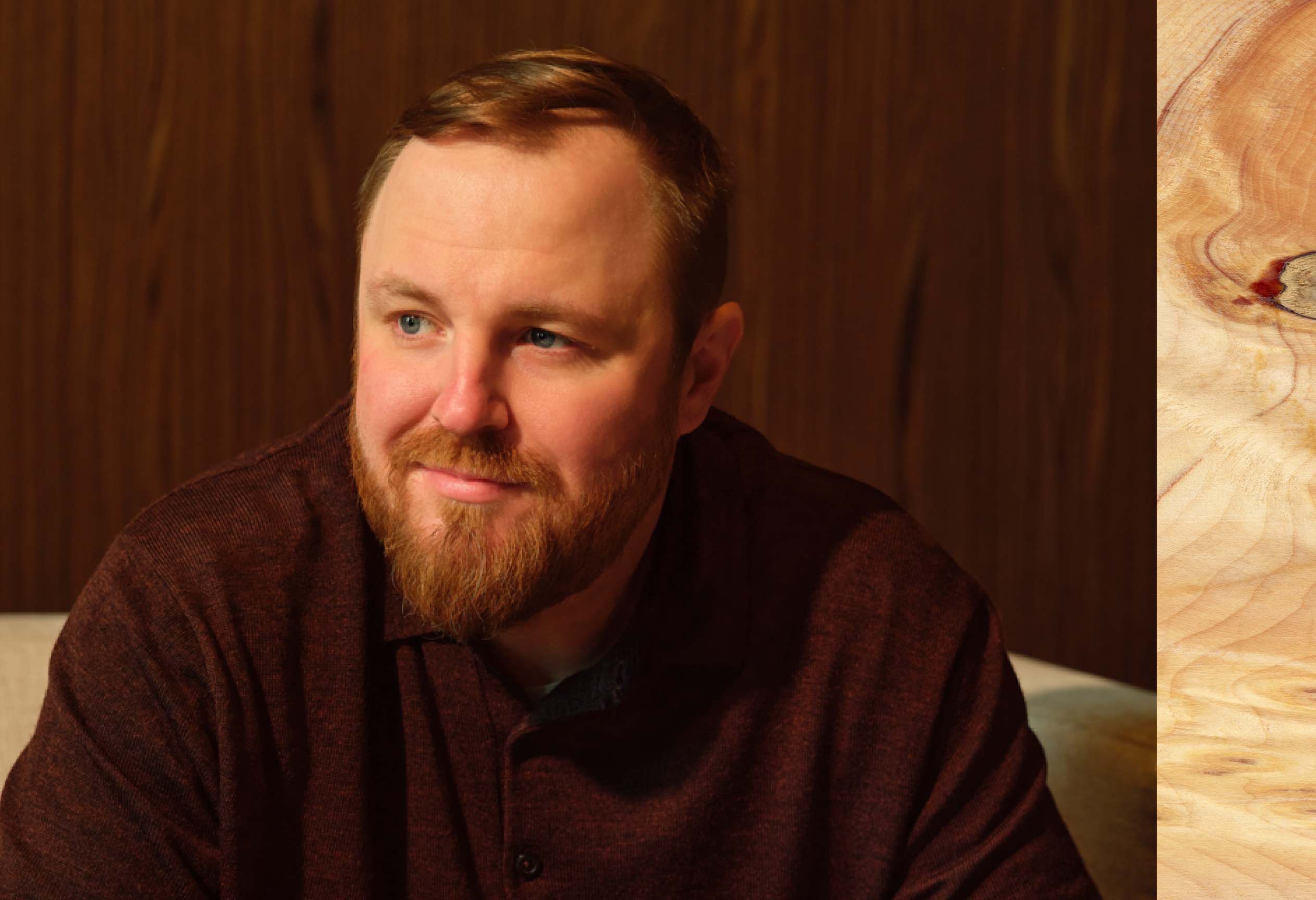
Dave Sutter Bet on Stablecoins When No One Else Would
Dave Sutter has been building the plumbing of the stablecoin economy since before most of the industry knew it needed plumbing. Before founding OpenTrade, he and his co-founder, Jeff Handler, worked at the joint venture between Coinbase and Circle that founded and governed USDC, before striking out on their own in January 2023 to found OpenTrade.
Their timing looked terrible on paper. FTX had just collapsed, crypto capital had frozen, and most investors wanted nothing to do with anything blockchain related. Dave and Jeff built it anyway.
Today, OpenTrade gives fintechs around the world, from neobanks to exchanges to payment service providers, a way to earn and pay yield on stablecoin balances at rest, all through an embedded, automated platform. We backed Dave and OpenTrade because we believe stablecoins are becoming the default way money moves across the internet, and Dave has spent his entire career building for exactly that shift.
“From my first meeting with Dave, I had a feeling we’d be partnering together,” said Samantha Lewis, Mercury Fund Partner and OpenTrade Board Member. “Dave has deep knowledge of the blockchain space, and such high conviction in what they’re building at OpenTrade. Not to mention, he’s been able to attract and assemble a high-caliber team. These attributes make him an all-star founder. I’m confident in a successful outcome at OpenTrade, but even without it, Dave is a guy that I’d back again and again.”
Here's Dave's story, in his own words.
What were you doing right before you started OpenTrade, and what made you finally pull the trigger on going all in on the idea?
"My co-founder Jeff and I were at Centre, a joint venture between Coinbase and Circle that founded and governed USDC until Circle acquired Coinbase's stake ahead of its IPO. I'd been working on stablecoins and tokenization in one form or another for over a decade. When Center started winding down in preparation for the acquisition and Circle's IPO, we decided to strike out on our own and build a business focused on stablecoin infrastructure. Based on what we'd done over the previous ten years, we decided to focus on yield, building an infrastructure provider that helps fintechs earn yield and pay yield on stablecoin balances. It was perfect timing. We left Centre in January 2023 and founded OpenTrade that same month."
What did the earliest version of OpenTrade look like, and how far is it from what you're building today?
"The core pieces were the same. We wanted to create a platform that connected stablecoin capital with institutional yield sources in a way that was embedded, so people could earn yield on stablecoins through the apps they already used. The main difference was the initial asset class. We originally wanted to focus on trade and supply chain finance, a huge asset class with strong risk-adjusted returns that's traditionally been paper-based and disconnected. We felt exposure to that asset class had a lot of benefits, but it was very difficult to build first. So we started with easier asset classes, like treasury bills and other liquid, publicly traded fixed income instruments, and that took off. The core vision stayed the same. What changed was the execution and what we chose to build first. We did eventually get to trade finance too. Today we have $20-$30M in AUM in trade finance assets. It just wasn't our first product."
Tell me what you're building, the problem you're solving, and for whom, and how you think about the market
"Stablecoins have experienced explosive growth over the last five years. They're now moving more money over the internet than Visa, Mastercard, PayPal, and Amex combined. It took them five years to reach transaction values that took traditional card networks seventy-five years to reach. In this new paradigm, there's a huge wave of fintechs building the next generation of financial services on stablecoin rails, and all of them need to earn and pay yield on stablecoins at rest. We built OpenTrade to fill that need. Any fintech building on stablecoin rails can use our treasury management product to earn yield, and they can white label our platform to power end user facing savings and earn products. We serve fintechs around the world, mostly neobanks, exchanges, and payment service providers, who use our platform to manage their own treasury cash and power yield products that let people earn safe, predictable, compliant returns on stablecoin balances at rest, in a fully integrated, automated, secure, and transparent way.
The market cap for stablecoins today is over three hundred billion dollars, and we have less than one percent of that. We expect the stablecoin market to grow ten times over the next five years, and we expect a wave of incumbent and traditional players to start building their financial services on stablecoin rails too, which will expand our addressable market even further. It's still very early days for stablecoin adoption. It's big today, but it's only going to get much bigger from here."
What do you think you understand about this problem that most people still don't?
"I understand how powerful stablecoins can be when applied to mainstream use cases and traditional financial services. In the early days, stablecoins were used primarily for trading crypto. Now they’re being integrated into mainstream financial services. I've built and implemented software at scale for some of the largest financial institutions in the world, so I have a very hands-on understanding of how bad legacy payment systems are, especially for moving money across borders. Most of the biggest advancements in payments over the last few decades have just been putting a new wrapper on infrastructure that hasn't changed materially since the seventies or eighties. Stablecoins exist completely outside that legacy infrastructure. They've been purpose-built for payments in a modern, AI-enabled, always-on, internet-native economy. I think stablecoins will become the default way banks, fintechs, businesses, and people move dollars over the internet. I don't come at this from a crypto trading perspective. I have very little interest in trading crypto. We're building for the mass adoption that's going to happen outside the crypto economy entirely."
What's the hardest decision you've made so far, and what did it teach you?
"The hardest decision most entrepreneurs make, especially at the earliest stage, is just deciding to start the company. Good entrepreneurs usually have plenty of options to go work somewhere established and make a lot more money doing something a lot less risky than starting a thinly capitalized, pre-seed company. That's scary, especially with a family. So the hard decision is saying you're not going to do the safe thing, you're going to take the risk and bet on yourself. When you do that, you typically have nothing. You have a PowerPoint, an idea, maybe one or two co-founders, and that's it. Everything starts from zero. It's a hard decision, but it's also the best one I've made. I couldn't imagine doing anything else."
When did you kick off your fundraising process, and what do you wish you'd known going into it?
"We started raising right away, only a few months after FTX collapsed. The consensus at the time was that crypto was dead, and since the primary use case for stablecoins back then was trading crypto, people assumed stablecoins were dead too. A lot of investors weren't touching anything blockchain related, and a lot of funds had been wiped out by FTX. It was a genuinely difficult environment.
What I wish I'd known is that you shouldn't take the no's personally. Most decisions venture capitalists make turn out wrong, and that's just the math of venture. If a fund hits three out of ten, that's a great fund. When you're raising and people give you their reasons for passing, don't ignore that feedback, but don't put too much weight on it either. You don't know their internal fund dynamics or whether their stated reason is the real one. The best foundational ideas usually aren't obvious, because if they were, everyone would already be doing them and there'd be too much competition. It's about putting the right amount of weight on the feedback, using it to sharpen your pitch, and not taking the no's personally. I understand that a lot better today than I did when we started."
How did you first meet Samantha Lewis and get introduced to Mercury Fund?
"I was introduced to Sam by Morgan Krupetsky at Ava Labs, the company behind the Avalanche blockchain network. We weren't even raising money at the time. Morgan just knew Sam was interested in investing in blockchain companies, and we'd had a close partnership with Avalanche, so she connected us. I told Sam what we were working on, and almost in that first conversation, she said she wanted to invest. She'd been looking for something like this and shared the thesis we had for the market. She saw the founder market fit, the timing, and the traction. The rest is history."
Why was Sam, and Mercury Fund, the right fit for OpenTrade at that stage?
"First, I could tell Sam was genuinely sincere in her conviction. She'd spent real time putting together an intelligent, detailed thesis, and she wasn't just reacting to headlines. She had a long-term view of the market and genuinely believed not just in our company, but in the thesis behind why our company existed in the first place. That alignment matters, because investors who don't have that tend to panic at the first sign of trouble, and panicked investors aren't helpful for early stage companies.
Second, as I met more of the Mercury team, I could tell they genuinely believed in a founder-first view of startups. We weren't just numbers on a page in their portfolio. They had empathy for the roller coaster of the startup experience and made it clear they'd be in our corner through good times and bad.
Third, I liked that Mercury wasn't based in New York or San Francisco. There's a lot of groupthink in those ecosystems. I believe great companies can come from anywhere in the US, not just the coasts, and that felt like a real point of differentiation.
Last, when I talked to other founders Mercury had backed, they only had good things to say. In several cases, founders were fighting to keep Mercury people on their boards well after Mercury's typical seed or Series A involvement had run its course, even at companies that had reached Series D, E, or pre-IPO. That told me the relationship was about more than the check."
If you weren't building OpenTrade, what do you think you'd be doing instead?
"I'd probably be building a defense tech startup. If crypto and stablecoins didn't exist, I don't think the world needs another AI entrepreneur. There's already so much happening there. On the other hand, the thesis around American dynamism, and how defense technology and procurement are changing the outlook for national security and warfare, is incredibly interesting to me. I studied international relations and military history in college. Defense tech is still ruled by old school, traditional prime contractors, and the stakes are incredibly high given the world we live in today. Bringing an entrepreneurial mindset to that industry would be exciting."
What's something about you that would genuinely surprise people if they only looked at your resume?
"People in stablecoins and crypto are probably viewed as pretty nerdy, spending their lives on crypto Twitter reading about coins and meme tokens. I do none of that. I spend almost all my time outside of work on very tangible, real world things: playing guitar and playing golf. My brother is a professional musician, and I have a huge guitar collection, even though I'm not very good. I'm also obsessed with golf. I go to the simulator and get very detailed about the mechanics of my swing, the ball spin, my club path, club head speed, all of it. Music and golf are a great way to disconnect from the internet financial world we live in."
Dave built OpenTrade in the exact moment the market told him not to, because he understood something the headlines didn't: stablecoins were never just a crypto trading tool. They're the rails the next generation of financial services will run on, and someone needed to build the infrastructure that lets fintechs actually use them. That's the kind of conviction we look for, grounded in years of hands-on experience, not just chasing a trend. We're proud to back Dave and the team at OpenTrade as they build that infrastructure for the long run.