


behaviors are ingrained in how I think. Lately, I’ve been spending a lot of time diving into retail and consumer buying trends, which is why the last ~12 months in commerce have caught my attention in a big way.
The 2025 holiday season did nearly $260 billion in online spend, up 8.5% compared to 2024. What's driving that growth is AI: traffic to U.S. retail sites from AI sources grew almost 700% year over year (source). But the number that actually changed how we look at the category came a few months later, in June 2026, when bot traffic surpassed human traffic on the internet for the first time in its history, 57% to 42%, globally.
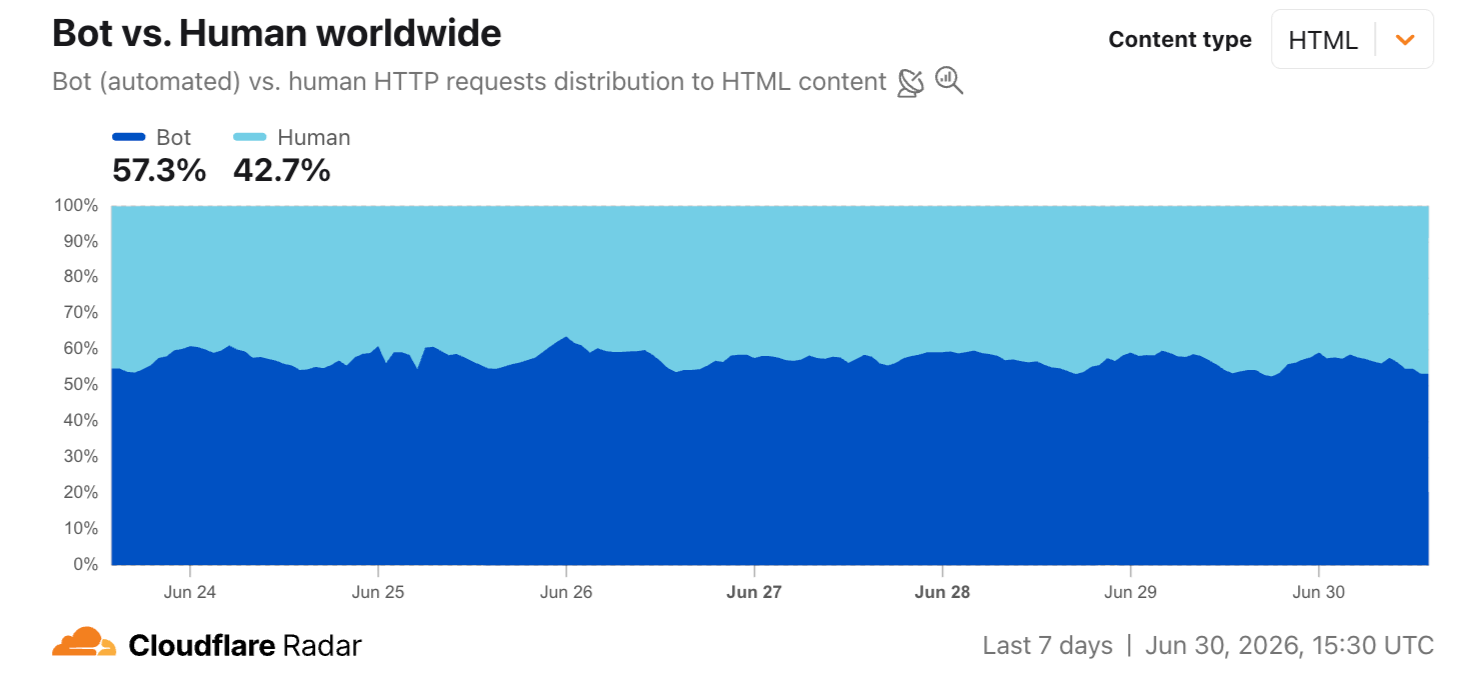
Bots are surfacing products and making recommendations on people's behalf, even though a person is still the one clicking buy now, and it's starting to work. AI-driven traffic converted 38% worse than non-AI traffic in March 2025, then flipped to convert 42% better just twelve months later. It seems that the system is getting smarter in real time.
The traffic mix backs this up in two other ways.
- Over 56% of online transactions now happen through a smartphone. Mobile is the dominant way people shop online.
- Social had the single biggest jump in channel performance in retail this year, up 40% year over year, and a lot of that isn't paid advertising, it's influencers flooding people's feeds with a new product. It's exactly the shift that led us to Nectar Social.
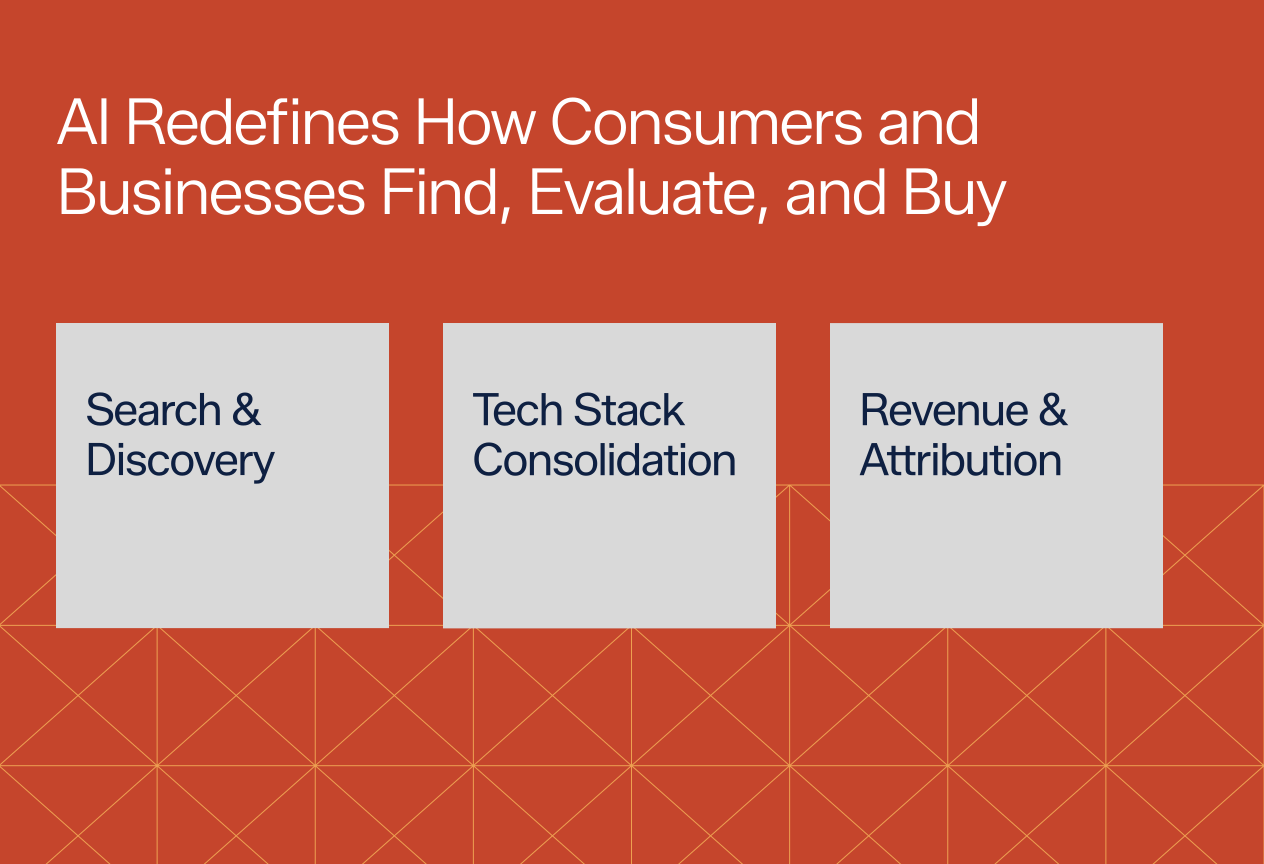
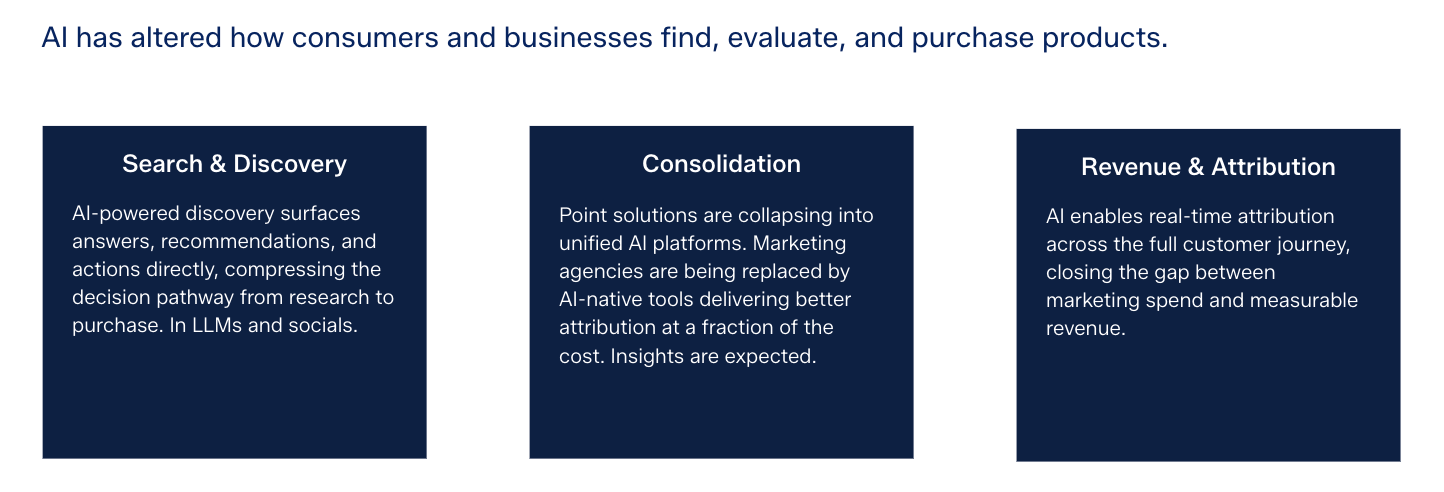
We think about buying behavior in terms of the purchase funnel, and AI is changing every stage of it. At the top, search and discovery is moving from SEO to answer engine optimization and generative engine optimization. Brands now have to think about how they're represented inside an LLM's response, not just a search results page, and whether that representation is accurate. In the middle, point solutions are consolidating. Tools like social media management, lifecycle communications and email, and a CRM are collapsing into a single AI-native platform, where the old standalone product is now just a feature. And at the bottom of the funnel, AI has enabled real-time attribution across the full customer journey in a way that simply wasn't possible before, so brands can finally see what a dollar of ad spend or a paid influencer actually returned.
Nectar Social and Queen One are both built for this moment. Nectar gives brands a native AI layer to respond to the hundreds of thousands of social DMs and messages they get every day, and it just closed a $30M Series A round led by Menlo Ventures earlier this year.
One of Mercury Fund’s newest investments was co-leading Queen One’s $25M round. Queen One was founded by a team out of Wunderkind, the identity resolution company that put the category on the map. They scaled the company to hundreds of millions in in ARR before starting Queen One, the AI-native version of Klaviyo, the platform most brands rely on to email or text their customers, except Queen One automates what Klaviyo never did, while also generating on-demand websites for each unique visitor.
Full agentic commerce, agents shopping and buying with no human in the loop, isn't here yet, and I think the jury is genuinely still out on the timeline. What has to exist first is infrastructure: checkout and payments, agent identity and authentication, and product catalog data that's actually structured for a machine to read, not just a person browsing a landing page. Of those three, agent identity is the one I spend the most time on personally. I spent part of my pre-VC career in security, and the question of how you verify an agent is actually acting on the right person's behalf before it's allowed to complete a purchase is, to me, the piece that has to get solved before any of the rest matters.
McKinsey projects under moderate scenarios, AI agents could mediate $3-5 trillion of
global consumer commerce by 2030. While the consumer side of commerce is still finding its footing with agents, we're not waiting for agentic commerce to arrive before we invest in it. We're backing the infrastructure it will run on.